
The Scientific Foundation of KAATSU
READ THE RESEARCH
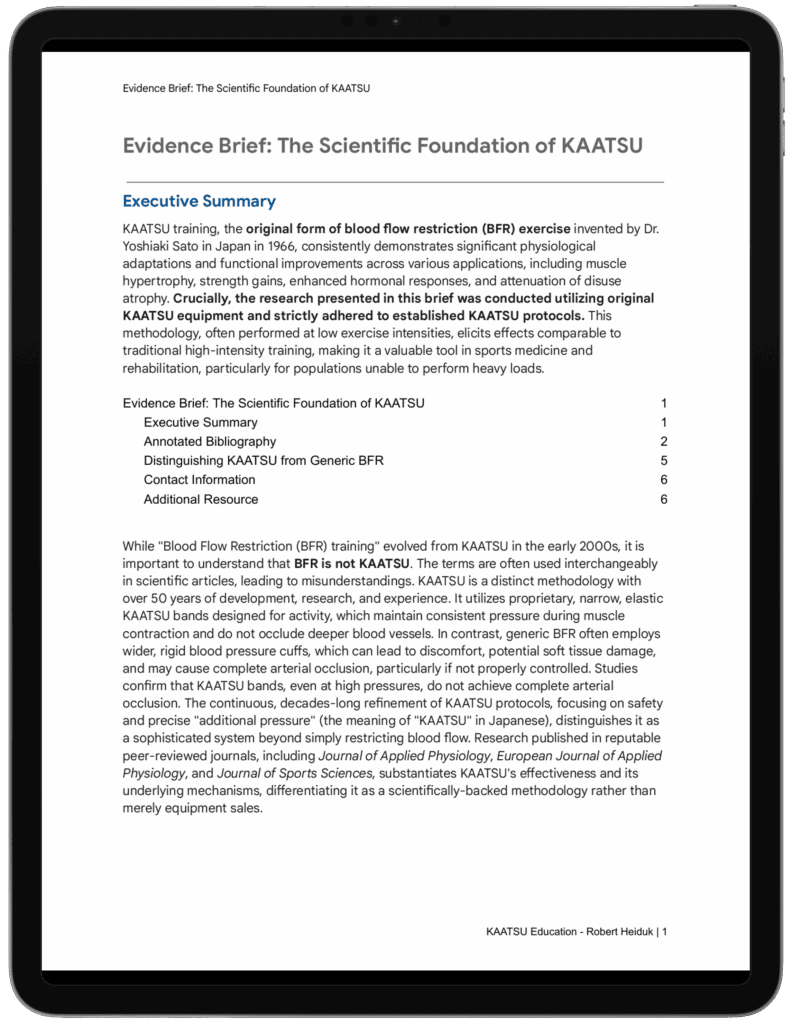
Evidence Brief
Explore the science behind KAATSU blood flow restriction training, the original BFR method invented in 1966. Backed by peer-reviewed research, this evidence brief reveals how low-intensity exercises can deliver high-impact results in muscle hypertrophy, strength gains, and rehabilitation—ideal for exercise professionals seeking evidence-based tools.
YOUR ADVANTAGE
Why KAATSU Elevates Your Training Practice
As an educator specializing in training methodology, I’ve seen firsthand how KAATSU—the original, scientifically validated form of BFR—transforms training outcomes for athletes, rehab patients, and everyday clients. Unlike generic BFR methods, KAATSU uses proprietary elastic bands and precise protocols to achieve muscle adaptations without heavy loads or risk of occlusion. This evidence brief compiles key peer-reviewed studies from journals like the Journal of Applied Physiology and European Journal of Applied Physiology, highlighting:
Low-Load Hypertrophy Protocols
Muscle size and strength gains with low-intensity exercises (20-50% 1RM).
Systemic Hormonal Response
Rapid increases in growth hormone and IGF-1 for enhanced recovery.
Early-Stage Orthopedic Rehab
Reduced muscle atrophy during immobilization, ideal for rehab.
Vascular & Metabolic Adaptation
Improved aerobic capacity alongside hypertrophy.
FREE RESOURCE
Clinical & Scientific Reference
Analysis of systemic vascular, hormonal, and neuromuscular adaptations during KAATSU application. Key findings compiled from research published in the Journal of Applied Physiology and related peer-reviewed literature.
SUMMARY
Advance Your Skills with KAATSU Education
KAATSU generates targeted metabolic and physiological adaptations—including systemic growth hormone response and muscle retention—under low mechanical loads, avoiding the complete vascular occlusion risks associated with generic BFR methods. Safe clinical integration requires structured protocol adherence and verified equipment control.
- Clinical & Athletic Protocols: Standardized application frameworks for rehabilitation, geriatric care, and high-performance training.
- Evidence-Based Insights: Direct translation of peer-reviewed research into daily practice.
- Methodological Safety: Verified operational standards for risk-free session administration.
Transition from generic blood flow restriction to verified KAATSU methodology.